This guide highlights top 12-volt solar panels suited for RVs, camping, boats, and off-grid setups. Each pick balances efficiency, durability, and ease of use to help you choose reliable power on the go. Explore compact kits, flexible options, and high-efficiency modules designed to maximize sun exposure and minimize maintenance in outdoor environments.
| Product | Brand | Type | Key Benefit |
|---|---|---|---|
| Renogy 200W ShadowFlux | Renogy | Rigid Panel | Anti-shading tech for shaded conditions |
| ECO-WORTHY 200W Kit | ECO-WORTHY | Panel Kit | High efficiency with PWM controller |
| Renogy 100W | Renogy | Rigid Panel | High 25% efficiency in a compact size |
| Renogy 50W | Renogy | Rigid Panel | Compact, durable for small setups |
| SOLPERK 20W | SOLPERK | Rigid Panel | Efficient 21–30% cell efficiency with smart controller |
Summary: The selections prioritize higher efficiency modules (Renogy and ECO-WORTHY), versatile kits for RVs and boats, and compact panels for tight spaces. Each option supports reliable 12-volt charging, weather resistance, and straightforward installation for off-grid living or recreational use.
Renogy 200W ShadowFlux Anti-Shading Panel

The Renogy 200W ShadowFlux panel uses anti-shading technology to maintain power in partial shade caused by buildings, plants, or other obstructions. It employs 16BB N-Type cells with 25% efficiency to maximize output while reducing hotspots and micro-cracks. The panel is designed to be compact, about 7% smaller and 10% more compact than standard PERC models, making it suitable for vehicles, boats, and small off-grid installations where space matters.
ECO-WORTHY 200W Solar Panel Kit

This 200W kit pairs high-efficiency monocrystalline panels with a 30A PWM charge controller, designed for RVs, campers, boats, and other off-grid applications. It supports daily outputs under strong sun and is built with corrosion-resistant framing, weatherproof components, and a junction box rated for IP65 protection. The system emphasizes reliability in variable weather and long-term durability for outdoor deployments.
SOLPERK 20W Solar Panel Kit
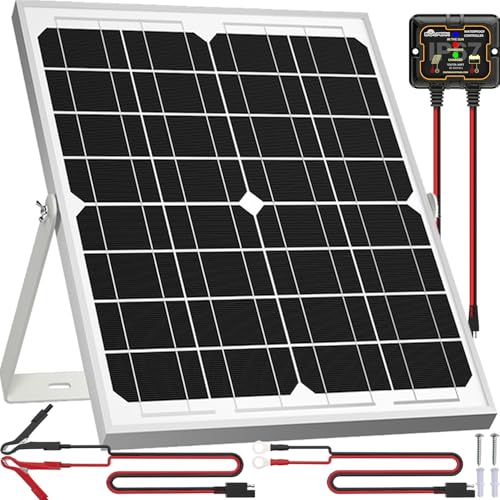
This 20W kit includes a 20W solar panel with monocrystalline A+ cells delivering 21–30% efficiency. It is designed to charge and maintain 12V batteries such as LiFePO4, Lithium Ion, AGM, and more. The package features a weatherproof build with a durable aluminum frame and a smart 8A controller offering three-stage charging to prevent overcharging and indicate charge status via LEDs.
Renogy Solar Panel 100W 12V

Renogy’s 100W 12V panel uses A+ graded N-Type cells achieving up to 25% conversion efficiency. The 16BB cell configuration minimizes hotspot risk and enhances overall lifespan. It is slightly smaller and lighter than earlier models, delivering strong power output in a compact form suitable for RV roofs, vans, and small off-grid setups while maintaining robust outdoor durability.
Renogy 50W 12V Solar Panel

Renogy’s 50W panel features advanced encapsulation, multi-layer laminations, EL testing for hot-spot prevention, and a corrosion-resistant aluminum frame. The panel uses anti-reflective glass and low-iron tempered materials to maximize light transmission and durability, ideal for compact RV packs, boats, or emergency power kits where space and weight matter.
Buying Guide: How To Choose The Right 12 Volt Solar Panel
When selecting a 12-volt solar panel, consider fit for purpose, climate, and maintenance needs. Here are several perspectives to help you compare options:
- Efficiency and cell technology: Higher efficiency panels (e.g., 25% N-Type cells) generate more power in limited space, which matters on small RV roofs or boats. For shaded areas, anti-shading or partial shading management reduces power loss.
- Durability and weather resistance: Look for corrosion-resistant frames, tempered glass, and IP-rated junction boxes. If you operate in extreme weather, ensure the kit can withstand wind, snow, and temperature fluctuations.
- System compatibility: Match panel wattage with your battery bank and controller. PWM controllers are common in mid-range kits; MPPT controllers optimize energy harvesting in variable conditions but add cost.
- Installation and mounting: Consider panels that flex for curved surfaces or are lightweight for quick mounting. For trailers or boats, lighter panels can simplify handling and reduce weight load.
- Expandability and available space: If you plan to expand later, choose panels with scalable kits or modular components. Ensure roof space or storage allows for the desired array size.
- Maintenance and warranty: Long-term durability and strong warranties reduce lifecycle costs. Inspect frames, wiring, and connectors regularly for signs of wear or corrosion.
In practice, a mix of high-efficiency rigid panels for main power and smaller flexible or kit-based options for tight spots often yields the best balance between output, space, and ease of use. For off-grid travelers, prioritize anti-shading features and robust mounting options to maintain steady charging in imperfect conditions. Always verify compatibility with your batteries and charging controller to maximize efficiency and protect your system.