No one wants to worry about nocturnal visitors raiding yards, gardens, or coops. The right solar-powered deterrent lights can create a humane, wildlife-friendly barrier that deters coyotes, raccoons, skunks, deer, and other pests without chemicals or traps. This guide reviews five top options, focusing on effectiveness, ease of use, weather resistance, and energy efficiency.
| Product | Brand | Deterrent Type | Power Source | Protection Coverage |
|---|---|---|---|---|
| Solar Nocturnal Animal Repeller with Red LED Flashing Lights | X-PEST | Dual red LED flashing lights | Solar-powered | Yard, garden, coop areas |
| X-octenol Solar Powered Racoon Repellent Devices with Flashing Lights | X-octenol | Two predator-eye style red LEDs | Solar-powered | Outdoor perimeters, coops |
| Qualihome Solar Animal Repellent | Qualihome | Solar ultrasonic with flashing lights | Solar-powered | Yards, gardens, livestock areas |
| G-Jyuncyou 4 Pack Solar Nocturnal Deterrent | G-Jyuncyou | Amber dynamic flashing lights | Solar-powered | Yards, gardens, chicken coops |
| Lycxbfjia 8 Pack Solar Predator Lights | Lycxbfjia | Predator-eye style flashing lights | Solar-powered | Perimeter protection for larger properties |
Note: All options emphasize humane deterrence, weather resistance, and simple installation—ideal for American yards and farms facing coyote and other nocturnal visits.
Solar Nocturnal Animal Repeller With Red LED Flashing Lights

Brand: X-PEST. This device uses dual red LED lights coupled with a 4Hz flashing pattern to mimic a predator’s presence. The design focuses on humane deterrence—no harm, no chemicals. It’s particularly effective against raccoons, coyotes, skunks, deer, and other nocturnal visitors. The solar panel powers a rechargeable battery, delivering protection from dusk to dawn and reducing energy costs. With an IP44 weatherproof rating, the unit remains functional in rain, snow, and other adverse conditions. Installation is straightforward, and the device can be placed in yards, gardens, or near chicken coops to establish a clear visual cue for trespassers.
X-octenol Solar Powered Predator Deterrents With Flashing Lights

Brand: X-octenol. This unit features two red LED flashing lights designed to simulate predator eyes or flames, providing a nonlethal deterrent for nocturnal animals. It’s solar-powered with automatic dusk-to-dawn activation. A typical 5-hour solar charge can yield up to 12 hours of protection. Easy installation allows mounting on posts, fences, walls, or trees. For extended coverage, multiple units can be placed around the property with directional alignment to create a comprehensive perimeter deterrent.
Qualihome Solar Animal Repellent With Ultrasonic Sound

Brand: Qualihome. This device combines solar power with infrared-like ultrasonic repulsion and flashing lights. The built-in PIR sensor detects animal presence and triggers ultrasound bursts alongside visual deterrents, which can influence a broad range of animals including cats, dogs, squirrels, raccoons, and deer. The product supports five adjustable modes and sensitivity controls, providing flexible performance for different environments. The detection range extends up to about 30 feet with a 110-degree coverage, making it a solid option for mid-sized yards and garden spaces.
G-Jyuncyou 4 Pack Solar Nocturnal Deterrent
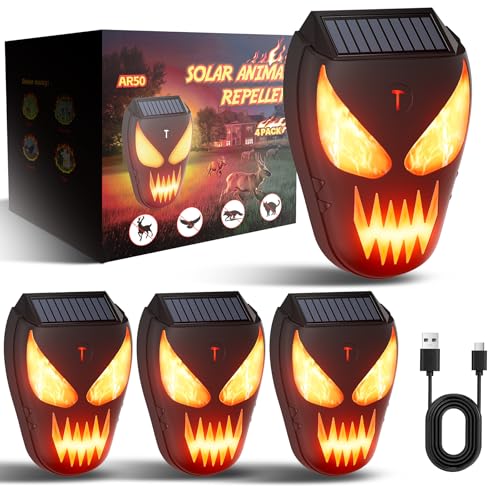
Brand: G-Jyuncyou. This four-pack set uses amber dynamic flashing lights to create a campfire-like flicker that humanely discourages coyotes, deer, wolves, foxes, raccoons, and other nocturnal visitors. It operates automatically from dusk to dawn, powered by a durable solar panel and backed by IP44 waterproofing for year-round use. A USB port provides additional power flexibility during overcast periods or extended cloudy spells, reducing downtime and ensuring consistent protection without manual intervention.
Lycxbfjia 8 Pack Solar Predator Lights

Brand: Lycxbfjia. This larger eight-pack setup expands perimeter protection with predator-eye style flashing lights designed to trigger an instinctual fear response in coyotes, raccoons, foxes, skunks, and deer. Solar-powered operation ensures night-long protection without wiring or ongoing electricity costs. The lights switch on at dusk and off at dawn, and multiple units can be placed around vast properties for comprehensive coverage. The system is designed for easy placement along fences, gates, or garden borders to establish a broad deterrent zone.
Buying Guide: Key Considerations For Choosing Coyote Deterrent Lights
- Effectiveness and deterrent type: Look for flashing predator-eye or amber campfire-like visuals, which tend to be more memorable to wildlife than simple lighting.
- Power source and battery life: Solar-powered units with robust panels and rechargeable batteries save on maintenance and provide consistent nighttime protection.
- Weather resistance: An IP44 rating or better ensures the device withstands rain, snow, and sun exposure typical in American yards.
- Coverage and placement: Consider units that offer wide detection ranges and the ability to mount on posts, fences, or trees for flexible perimeters.
- Ease of installation: Most devices are plug-free and require no wiring. Choose kits with clear mounting hardware and simple ON/OFF operation.
- Humane approach: Opt for devices that deter rather than harm wildlife, focusing on deterrence signals and ultrasonic options when appropriate.
- Maintenance and durability: Look for durable ABS/PC construction and components designed for long-term outdoor use, with minimal upkeep.
- Scalability: For larger properties, multiple units can be more effective. Check whether the system allows easy expansion or reseating.
- Noise and scent considerations: Some deterrents use ultrasound or lights; ensure they won’t disturb nearby humans or pets in the home.
Choosing the right coyote deterrent lights depends on property size, local wildlife patterns, and preferred deterrence methods. By comparing models across the above criteria, homeowners can select a humane, low-maintenance solution that protects crops, poultry, and landscaping while reducing nighttime wildlife contact.