Choosing the right grassy weed herbicide can protect your lawn from crabgrass, clover, and other unwanted invaders while preserving the turf you want. Below are five well-regarded options that balance broad-spectrum weed control with selective action on grasses. Each product offers varying timing windows, residual effects, and active ingredients, so you can pick the best fit for your lawn’s needs and conditions.
| Product | Brand | Key Benefit | Main Active Ingredient |
|---|---|---|---|
| BASF Drive XLR8 Crabgrass Killer | BASF | Up to 30 days residual control | Quinclorac |
| Atticus Torocity Herbicide | Atticus | Pre and post-emergent flexibility | Mesotrione |
| Syngenta Tenacity Herbicide | Syngenta | Broad-spectrum control, seedings-friendly | Mesotrione |
| Pro Crabgrass & Grassy Weed Killer | Liquid Harvest | High concentration for rapid results | Quinclorac |
| Select Source Triad QC Select | Select Source | Three-way control with mix of actives | 2,4-D, Dicamba, Quinclorac |
Note: This selection focuses on products that address grassy and broadleaf weeds in lawns and turf, offering a range of active ingredients and application windows to match different yard conditions and weed pressures.
BASF Drive XLR8 Crabgrass Killer for Lawn & Turf

BASF Drive XLR8 targets a broad array of grassy and broadleaf weeds while delivering up to 30 days of residual control. The water-based formulation supports faster plant uptake and rapid visible results, with a rainfast time under an hour. This product is designed for post-emergent control, making it effective for established lawns facing crabgrass, foxtail, kikuyu, signal grass, torpedo grass, and common broadleaf weeds like bindweed, clover, dandelion, black medic, and horseweed. Consider Drive XLR8 if you want extended protection after a single application, especially in weed-dense turf areas.
Atticus Torocity Herbicide (8oz) – Mesotrione Concentrate
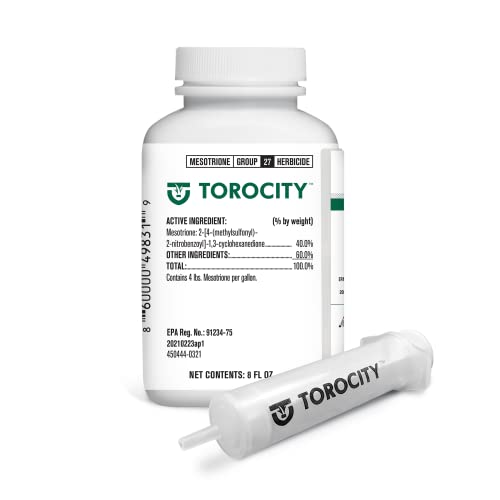
Torocity brings a flexible pre- and post-emergent approach with 40% mesotrione, mirroring a trusted active ingredient in established products. It offers an extended application window to tackle existing weeds while preventing new ones, suitable for newly seeded areas and mature lawns. It provides broad-spectrum weed control, including crabgrass, ground ivy, clover, oxalis, dandelion, and more. If you want a dual-timing option that broadens weed-management opportunities, Torocity is a balanced choice.
Syngenta Tenacity Herbicide

Tenacity blends broadleaf and grassy weed control with a unique ability to be used at seeding or overseeding times. Its mesotrione-based formula is labeled for 46 weed species, including crabgrass and dandelion, and is designed for precise selective action that preserves desirable grasses. It supports post-emergent control and seedling establishment without harming the lawn. Tenacity is a versatile option for people who seed lawns or renovate patches while managing existing weeds.
Pro Crabgrass & Grassy Weed Killer – 64 Ounces

This concentrated Quinclorac formulation offers high potency and rapid, visible results with residual control. It is designed for lawns and landscapes, providing a robust defense against common broadleaf weeds and grassy invaders. The 18.92% Quinclorac concentration emphasizes weed suppression, easing ongoing maintenance. Quick-drying chemistry helps minimize downtime between applications, making it suitable for larger turf areas or professional settings where weed pressure is high.
Select Source Triad QC Select

Triad QC Select combines three active ingredients—2,4-D, Dicamba, and Quinclorac—to deliver broad-spectrum control of many broadleaf and grassy weeds. This post-emergent formula is suitable for residential and non-residential lawns, athletic fields, roadsides, parks, and golf turf (excluding tees, greens, and collars). It is especially useful for late-season weed cleanups when pre-emergent timing has passed, helping to reduce weed carryover and protect established turf.
Buying Guide: Key Purchase Considerations
Choosing the right grassy weed herbicide requires weighing several factors to ensure effective control while protecting your lawn. Here are important considerations and comparisons to help you decide:
- Active ingredients and weed spectrum: Quinclorac, mesotrione, and combinations of 2,4-D/Dicamba provide different weed controls. For example, products with Quinclorac excel against crabgrass and other grasses, while mesotrione-based options often offer broader broadleaf weed control and seedling tolerance when seeding.
- Post-emergent vs. pre-emergent timing: Some products are optimal for post-emergent control (active on existing weeds), while others support pre-emergent or seedling-stage applications. Torocity and Tenacity provide flexible timing, including seeding scenarios. Consider your current weed stage and future regrowth risk.
- Residual duration: Residual control can reduce frequent applications but may require more precise application timing to avoid harming desirable grasses. Drive XLR8 advertises up to 30 days of residual control, while others focus on rapid, visible results with shorter or variable residuals.
- Safety and turf compatibility: Some formulations are gentle enough for newly seeded lawns or overseeding, while others are best for established turf. Always check label directions for tolerance on your grass species and avoid applying to lawns where you want to preserve sensitive grasses.
- Application sites and settings: Consider whether you need a product suitable for residential lawns, athletic fields, or commercial landscapes. Some products are labeled for non-residential turf or specific turf types, which affects where they can be used.
- Ease of use and concentration: Higher-concentration products may offer cost savings per area but require careful dilution and mixing accuracy. Professional-grade concentrates are common in the market and often paired with broader active-ingredient blends.
- Environmental considerations: Look for formulations with water-based carriers where possible and follow rainfast times to maximize effectiveness while minimizing runoff risk. Always read the label for safety and environmental guidance.
In selecting a grassy weed herbicide, align the product’s active ingredients, timing window, and residual control with your lawn’s weed profile, soil condition, and maintenance plan. For yards facing crabgrass and broadleaf weeds, a product with Quinclorac or a multi-ingredient blend may offer robust results. If seeding or overseeding is planned, options designed for seeding stages, like Tenacity or Torocity, can help protect new grass while suppressing existing weeds.