Choosing the right heat pump for an inground pool involves balancing heating power, energy efficiency, temperature range, and smart features. The options below cover a range of sizes and capabilities to help you extend your swimming season without breaking the bank. Each model brings a mix of inverter technology, WiFi control, and durable construction designed for American climates.
Choosing at a glance: The following table highlights five well‑rounded inground pool heat pumps. Consider pool size, climate, and desired water temperature when comparing these options.
| Product | Brand | BTU | Max Pool Gallons | Key Features |
|---|---|---|---|---|
| Varpoolfaye 40000 BTU | Varpoolfaye | 40,000 | Up to 120,000 | WiFi control, heating and cooling, 220V, high COP, schedules |
| AQUASTRONG 75,000 BTU | AQUASTRONG | 75,000 | Up to 21,000 | Year‑round heating/cooling, app control, high efficiency inverter |
| Dr Infrared DR-650HP | DR. INFRARED HEATER | 65,000 | Up to 18,000 | Full DC inverter, adjustable 20–100%, durable engineering |
| MICOE 35,000 BTU | MICOE | 35,000 | Up to 12,000 | Titanium heat exchanger, app control, auto‑defrost |
| TURBRO 50,000 BTU Beluga | TURBRO | 50,000 | Up to 16,000 | Full DC inverter, WiFi, high COP, energy saving |
Varpoolfaye 40000 BTU Pool Heater

The Varpoolfaye 40000 BTU heat pump is designed for versatility across inground and above‑ground installations, handling pools up to 120,000 gallons when paired with the right system. It delivers a COP around 6.2, indicating strong energy efficiency for sizable environments. With a 220V connection, this model supports year‑round operation, offering heating from 59°F to 104°F and cooling from 45°F to 86°F. The built‑in smart WiFi control makes it possible to adjust temperature, set schedules, and manage functions remotely, ensuring comfort before you even arrive home. This unit suits larger residential pools or those that need consistent performance in mixed climates.
Key considerations include installation planning for 220V circuits, ambient temperature ranges, and how you plan to use cooling modes. For inground pools closer to 120,000 gallons, ensure the surrounding equipment and electrical setup can support extended high‑demand operation. The unit’s high‑pressure compressor contributes to robust heating capabilities, while the WiFi control adds modern convenience for busy households. Remember to verify your pool volume and climate zone to ensure this model provides the expected year‑round comfort.
AQUASTRONG Inverter 75,000 BTU Heat Pump

The AQUASTRONG 75,000 BTU heat pump is engineered for larger pools and extended seasons. It offers a dual‑mode system that supports both heating (47–104°F) and cooling (47–83°F), enabling comfortable swimming in shoulder seasons. With the capacity to heat up to 21,000 gallons efficiently, this model emphasizes speed and reliability, delivering rapid warmth for sizeable inground or above‑ground pools. The inverter technology supports smoother operation and energy savings, and the accompanying app provides control over temperatures, schedules, and energy use.
From an energy perspective, the inverter DC technology adjusts power output to match demand, helping reduce utility costs compared with traditional electric heaters. Potential considerations include ensuring your electrical service can accommodate a high BTU unit and confirming compatibility with your pool’s volume and climate. The app integration offers remote monitoring, aiding maintenance and seasonal scheduling for consistent water temperatures throughout the year.
Dr Infrared 65,000 BTU Full DC Inverter Pool Heater

The Dr Infrared DR‑650HP model uses full DC inverter technology, offering flexible heating for inground and above‑ground pools up to about 18,000 gallons. It operates at 208–230V with a wide current draw range, making it suitable for many pool installations. The inverter system allows the compressor to adjust from 20% to 100% capacity, balancing performance and energy efficiency. The robust design is paired with CSA and AHRI certifications, underscoring durability and reliability for long‑term use. This unit is a strong choice for homeowners seeking precise temperature control with quieter operation and lower energy spikes.
When evaluating this heater, consider pool volume, typical climate, and how aggressively you want to pursue warm water. The adjustable capacity helps reduce overshooting and minimizes wear on components. However, ensure your electrical panel and wiring meet the required standards for 65,000 BTU, and plan for professional installation to maintain warranty coverage and safety compliance.
Varpoolfaye 30000 BTU Pool Heater

The Varpoolfaye 30000 BTU unit is sized for mid‑range inground pools up to 8,000 gallons, with 14–26 foot configurations supported. It provides heating from 46°F to 104°F and cooling from 46°F to 82°F, enabling flexible temperature control across seasons. WiFi connectivity allows remote management of temperatures, schedules, and settings, aligning with modern smart‑home expectations. For smaller to mid‑sized pools, this model can offer a cost‑effective balance of heating power and energy efficiency while still delivering reliable performance during shoulder seasons.
Consider pool size and whether you anticipate long warm seasons in your region. This model’s smaller BTU output makes it less suitable for very large inground installations, but it can be ideal for compact layouts or pools with limited electrical capacity. Ensure the heat pump’s heat exchange materials are compatible with your pool’s water chemistry, especially if you use saltwater systems.
MICOE 35,000 BTU Inverter Pool Heater
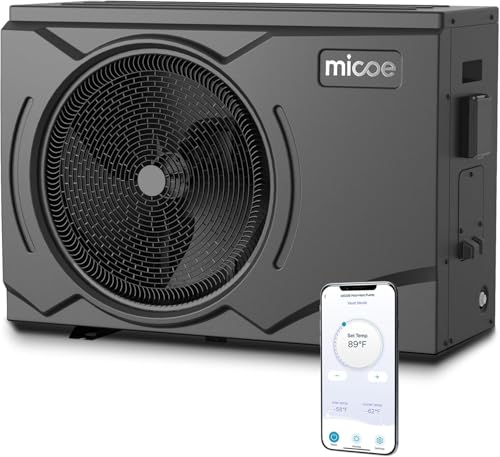
The MICOE 35,000 BTU inverter pool heater is designed for up to 12,000 gallons, supporting both inground and above‑ground setups. Its titanium heat exchanger provides corrosion resistance in saltwater environments, helping extend equipment life. The unit operates on 220–240V with a broad heating range (46–104°F) and cooling up to 82°F, facilitating year‑round comfort. Smart control via app or control panel enables scheduling and remote temperature management, with a built‑in auto‑defrost function to handle colder climates or less forgiving water conditions.
Key decision points include pool size, saltwater usage, and climate. The titanium heat exchanger is a plus for longevity in salt‑water or chemically aggressive environments. Because this unit is on the lower end of BTU, it’s best suited for mid‑sized pools or for users prioritizing energy efficiency and smart features over raw heating power. Verify compatibility with your existing electrical setup and ensure the installation follows local electrical codes for 240V systems.
WOPOLTOP 100,000 BTU Inverter Pool Heater
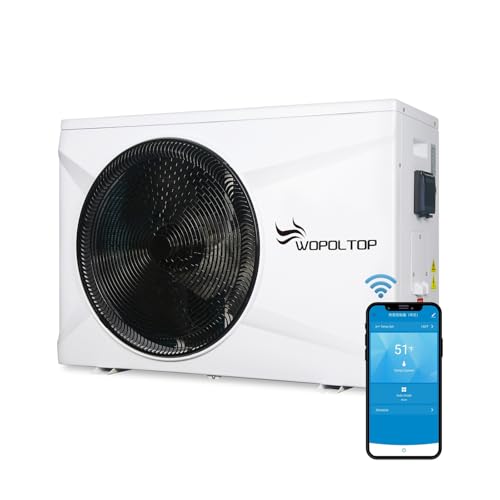
The WOPOLTOP 100,000 BTU DC inverter model is designed for large pools, with a significant cooling and heating range and a claimed COP up to 6.8. Its dual‑function heating and cooling and full DC inverter drive provide smooth operation and potential energy savings. This model targets pools up to 26,000 gallons, making it a strong option for larger inground installations or family pools that see heavy use. The WiFi smart control enables remote temperature management and scheduling, supporting energy management and convenient operation.
When evaluating this high‑capacity option, consider electrical service requirements, ventilation for the equipment pad, and the anticipated peak load. The inverter approach helps minimize energy spikes and maintain stable water temperatures, but installation complexity and cost can be higher. Assess climate, desired water temps, and whether you’ll rely on cooling mode to offset heat in hot summers, as this can impact overall energy usage.
Buying Guide: Key Purchase Considerations
- Pool size and volume: Match BTU rating to the maximum gallons of your inground pool; larger pools require higher BTU and robust HVAC components.
- Climate and season length: In temperate or cold climates, inversion technology and a broad heating range help extend swimming seasons more reliably.
- Energy efficiency: Look for full DC inverter systems and COP ratings; higher COP generally means lower operating costs over time.
- Controls and connectivity: WiFi or app control adds convenience for scheduling, remote monitoring, and energy management.
- Electrical requirements: Ensure your electrical service and circuit wiring support the unit’s voltage, current, and startup loads; consider professional installation.
- Compatibility and materials: Titanium heat exchangers resist corrosion in saltwater; verify compatibility with pool chemistry and salt levels.
- Durability and certifications: CSA, AHRI, and IP ratings indicate build quality and reliability in varied conditions.
- Maintenance needs: Check for defrost features, filter cleanliness, and accessibility for routine servicing.
- Noise and vibration: Inverter systems generally run quieter; consider placement to minimize sound transfer near living spaces.
In summary, the best heat pump for your inground pool balances pool size, climate, and energy goals. The five options above provide a spectrum of power, efficiency, and smart features to fit different setups—from compact, saltwater‑ready systems to large, inverter‑driven units that support year‑round swimming. Always verify installation requirements and consult with an HVAC professional to ensure safe, compliant operation aligned with your local codes.