Maintaining the right soil pH is essential for grass and other lawn plants to absorb nutrients efficiently. A soil pH in the near-neutral to slightly acidic range helps ensure greener, thicker turf and fewer nutrient deficiencies. The following guide reviews five practical products designed to test, monitor, and adjust soil pH for grass, lawns, and general outdoor gardening. Whether you’re a home gardener or managing a larger yard, these tools can help you dial in the optimal pH for vibrant, resilient grass.
| Product | What It Helps With | Best For |
|---|---|---|
| NewTest Soil pH Test Kit | Accurate soil pH readings with upgraded strips and measuring cylinders | |
| 2-in-1 pH & Nitrogen Soil Test Kit (Sooenben) | Quick pH and nitrogen results in one kit | |
| FoxFarm Cultivation Nation pH Down | Lowers pH for optimal nutrient uptake | Soil and hydroponic setups needing pH reduction |
| Smart Soil pH Meter (UIUZMAR) | Digital pH (and temperature) readings for soil and liquids | On-the-go and multi-plant testing with immediate readouts |
| 100 Soil pH Test Strips (DOMICA) | Quick pH range testing (pH 3–9) for various soils | Cost-effective, repeatable measurements across multiple spots |
Below, five products are explored in detail. Each section highlights how the item can help optimize grass health by supporting accurate testing, timely adjustments, and practical usage in typical American lawns and gardens.
NewTest Soil pH Test Kit

The NewTest kit emphasizes accurate garden soil pH readings with upgraded test strips and measuring cylinders. It includes clear instructions to guide beginners through professional testing methods, helping gardeners obtain precise readings across different lawn areas, whether you’re testing a patch of Bermuda grass, Kentucky bluegrass, or a vegetable border. The 4 colorimetric blocks reduce interpretation errors, and the measuring cylinders improve the accuracy of sample dissolution, making it easier to keep track of pH changes over time. With 125 tests included, this kit is a practical, cost-effective choice for regular lawn monitoring.
2-in-1 pH & Nitrogen Soil Test Kit

This 2-in-1 kit provides both pH and nitrogen readings, giving a broader picture of soil health. pH affects how nutrients are absorbed, while nitrogen influences leaf color and growth rate—key factors for a lush lawn. The kit guides users from soil collection to color-moded results in about an hour, eliminating the need for costly lab tests. The included test tubes, scales, and an instruction manual make it easy to compare current soil conditions with lawn-care targets, so you can tailor amendments to distinct zones of a yard with different grass types.
Greenway Biotech Ammonium Sulfate 21-0-0
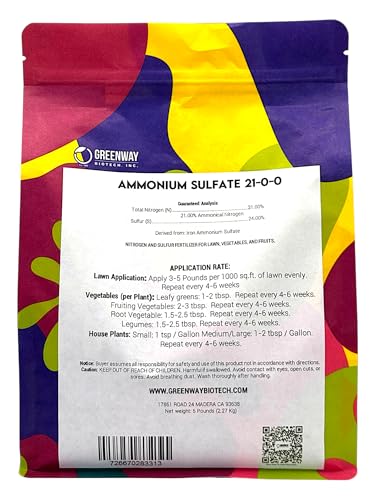
Ammonium sulfate is noted for lowering soil pH in alkaline conditions while supplying essential nitrogen and sulfur. This can be advantageous for acid-loving grasses or when soil pH trends higher due to regional irrigation practices. The product is water-soluble, allowing quick nutrient availability to grasses and other lawn plants. In addition to promoting a vigorous green color, the nitrogen content supports steady growth. Gardeners should apply according to label directions to avoid oversaturation and to align with soil test results indicating when pH adjustment is needed for optimal nutrient uptake.
FoxFarm Cultivation Nation pH Down

Designed to lower pH effectively, Cultivation Nation pH Down uses citric acid to adjust nutrient solution pH in hydroponic and soil-based gardens. Maintaining a pH in the 5.6–6.8 range supports nutrient availability and promotes healthy grass and other plants. The product is user-friendly: shake, test, and add small amounts of pH Down until the desired level is reached. This method helps ensure consistent pH across lawn sections that may experience different irrigation patterns or soil types, contributing to uniform turf health across a yard.
Smart Soil pH Meter (UIUZMAR)

This digital meter provides quick soil pH readings along with temperature, which can be helpful when trying to tailor irrigation and fertilizer schedules for grass. Its compact design makes it easy to move between lawn zones, and the clear display helps confirm when pH is within the ideal range for common grasses. Digital meters reduce guesswork and offer a straightforward way to monitor changes over time as you test different amendments, such as lime or sulfur, to fine-tune pH for optimal turf growth.
100 Soil pH Test Strips (DOMICA)

DOMICA offers a large pack of pH test strips suitable for frequent lawn testing. The strips cover a wide pH range (3–9), making them versatile for diverse soil conditions. The product is designed for quick testing: collect a soil sample, prepare a solution, and dip the strip to reveal a color match. The kit includes multilingual instructions and is a cost-effective way to routinely track pH across multiple lawn areas, enabling timely applications of lime or sulfur where needed to support consistent, healthy grass growth.
Buying Guide: Key Considerations and Comparisons
- Testing method: Choose between test strips for cost-effective, frequent checks and digital meters for quick, precise readings. Strips are great for many spots; meters provide immediate numeric values and trends.
- Accuracy vs. convenience: Upgraded strips with color blocks can reduce reading errors, while measuring cylinders and proper dilution steps improve accuracy in some kits.
- Scope of testing: If you manage a large lawn, a kit that covers both pH and nutrients (like nitrogen) can save time and help tailor fertilizer strategies.
- Soil type and climate: Some regions require more frequent testing due to irrigation water, soil mineral content, or lime-sulfur interactions that shift pH over time.
- Adjustments: When pH is outside the optimal range for your grass, plan amendments (e.g., lime to raise pH or sulfur to lower it) based on test results and plant needs.
- Ease of use: Starter kits with clear instructions, included tools, and pre-measured solutions reduce the learning curve for beginners.
In summary, selecting the right pH testing and adjustment tools depends on your lawn size, preferred testing frequency, and how actively you manage soil chemistry. For many homeowners, a combination of a digital meter for quick checks and test strips or a comprehensive kit for periodic validation offers a balanced approach to maintaining an ideal pH for thriving grass.