Peace lilies (Spathiphyllum) thrive in well-drained, nutrient-balanced soil that retains moisture without becoming waterlogged. The right potting mix supports strong root systems, vibrant foliage, and long-lasting blooms. Below are five highly compatible options designed specifically for peace lilies and similar indoor plants, with a focus on aeration, drainage, and organic nutrients. This guide helps you compare textures, ingredients, and planting suitability to keep Peace Lilies thriving in containers at home or in the office.
| Product | Brand | Approx. Volume | Key Benefit |
|---|---|---|---|
| Peace Lily Potting Soil Mix (8 Quarts) | Soil Sunrise | 8 quarts | Nutrient retention with balanced pH and aeration |
| Organic Peace Lily Potting Soil | Perfect Plants | 4 quarts | Chunky, loamy mix with composted pine bark and coco coir |
| Professional Peace Lily Soil | Leaves and Soul | 2.2 quarts | Ready-to-use blend with peat moss, coco coir, and perlite |
| Gardenera Professional Grade Potting Mix | Gardenera | 2 quarts | Canadian peat, bark, perlite, charcoal for moisture and air |
| Doter Organic Peace Lily Soil Mix | Doter | 2 quarts | Balanced nutrition and pH for robust growth |
Peace Lily Potting Soil Mix (8 Quarts) by Soil Sunrise
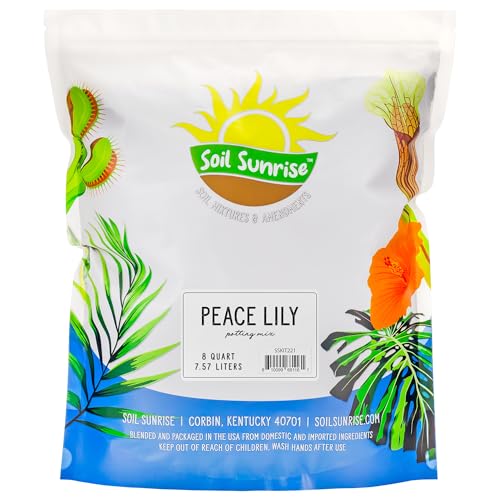
This 100% natural potting blend is formulated specifically for Spathiphyllum, focusing on nutrient retention, aeration, and pH balance. It contains no added chemicals or artificial fertilizers, making it suitable for indoor or outdoor container gardening. The mix aims to create a supportive root environment that helps Peace Lilies establish quickly and grow steadily, with a healthy balance of organic matter to support ongoing nutrition.
Organic Peace Lily Potting Soil by Perfect Plants

Perfect Plants offers an organic premium mix ideal for Peace Lilies, Pothos, and other houseplants. The blend includes composted pine bark, peat moss, perlite, coconut coir, granite sand, and dolomite lime to create a chunky, loamy texture. Hand-mixed in the USA, this soil supports moisture retention and adequate aeration, making it a strong option for indoor repotting and long-term plant health in homes and offices.
Professional Peace Lily Soil

This ready-to-use blend from Leaves and Soul is designed to support growth for Peace Lilies and other Spathiphyllum varieties. It focuses on premium non-organic, all-purpose soil with strong fertilizer absorption and excellent aeration. The mix promotes proper drainage to prevent overwatering, helping maintain root health and steady bloom potential for indoor flowering plants in containers.
Gardenera’s Professional Grade Potting Mix for Peace Lilies

This 2-quart bag is crafted to provide the perfect growing environment for Peace Lilies and other indoor plants. It uses Canadian peat moss, New Zealand bark, perlite, horticultural bamboo charcoal, and Sphagnum moss to balance moisture retention, aeration, and nutrient availability. The blend helps prevent water-logging while supporting healthy root development and vibrant foliage.
Doter Organic Peace Lily Soil Mix

Doter’s organic mix is tailored for Peace Lilies, offering balanced nutrition and a thoughtfully balanced pH. The formula supports strong root development and vibrant foliage, with a focus on sustaining long-lasting blooms. The organic approach aims to minimize synthetic inputs while delivering reliable growth support for indoor peace lilies and similar houseplants.
Buying Guide
- Plant-specific balance: Look for mixes designed for Peace Lilies that emphasize moisture retention without compromising drainage. This helps prevent root rot while keeping roots adequately hydrated.
- Texture and ingredients: Chunky, loamy blends with pine bark, coco coir, perlite, and sphagnum or peat provide good aeration and steady moisture. Avoid overly dense soils that suffocate roots.
- pH considerations: Peace lilies prefer slightly acidic to neutral pH. Choose blends that mention pH balance or avoid mixes with high lime content that could raise pH too much.
- Organic versus synthetic: Organic mixes with composted plant materials and natural fibers promote healthier soil biology. If using synthetic fertilizers, ensure the mix offers a balanced base without over-fertilizing.
- Ready-to-use versus DIY: Ready-to-use blends save time and reduce measurement guesswork. DIY blends offer customization but require careful ratio control for optimal results.
- Container needs and plant size: For larger Peace Lilies, consider bigger volumes with consistent moisture retention. For smaller pots, lighter blends with good drainage work well to avoid standing water.
- Repotting frequency: Peace Lilies often benefit from repotting every 1–2 years. Use a fresh mix to replenish nutrients and improve drainage as roots fill the container.
- Maintenance considerations: Some blends include beneficial additives like charcoal for filtration or dolomite lime for pH stability. Weigh these benefits against your plant’s specific needs.