Choosing the right solar powered electric fence charger can protect livestock, deter predators, and minimize energy costs on a farm or homestead. This guide reviews five top options, highlighting range, durability, and ease of installation. Each product is evaluated for reliability in varied weather, posting versatility, and energy efficiency—critical factors for American farms and backyard setups alike. Read on to compare models and find the charger that best matches your fencing length, animal type, and post configuration.
| Product | Brand | Range / Output | Key Benefits |
|---|---|---|---|
| Zareba ESP5M-Z Solar Powered Electric Fence Charger | Zareba | Up to 5 miles (light weeds up to 2.5 miles) | Built-in mounting bracket; USA-made; 1-year warranty including lightning damage |
| Andmon MINI400 20 Miles Solar Electric Fence Charger | ANDMON | Up to 20 miles | High-capacity panel; 0.3J output; long run time on battery |
| VEVOR Solar Fence Charger | VEVOR | 0.3J / up to 8 kV | IP65 waterproof; 10W solar panel; 7 days runtime |
| ANDMON S600 Solar Electric Fence Charger | ANDMON | Up to 35 miles; 0.65J | DC charging option; versatile post mounting |
| S1000 1 Joule Solar Fence Charger | Realpoultry | Up to 40 miles; 1J stored | Portable; rugged, suitable for remote pastures |
Zareba ESP5M-Z Solar Powered Electric Fence Charger

The ESP5M-Z from Zareba is designed for moderate fencing lengths in typical farm settings. It claims a 5-mile rating under ideal conditions, with effectiveness up to 2.5 miles in light weeds. Installation is straightforward thanks to a built-in mounting bracket compatible with T-posts, Y-posts, and round-wood posts. The unit is manufactured in the USA and undergoes full-load testing, with a 1-year limited warranty that covers lightning damage. This charger emphasizes reliable performance in clean environments and ease of use for small to mid-size paddocks.
Key considerations include wire type, weed growth, and fence layout, which can influence practical range. Users should ensure environment is weed-free near the energizer and that posts are properly grounded for optimal performance. The ESP5M-Z serves well for hobby farms, goat pens, and garden perimeters where moderate containment is required.
Andmon MINI400 20 Miles Solar Electric Fence Charger

The Andmon MINI400 delivers a robust 0.3 joules of output energy and claims coverage up to 20 miles of fencing, suitable for larger pastures or multi-section installations. It relies on a 18.5V/3W solar panel and a 12V/4.5Ah sealed lead acid battery, providing up to 14 days of operation without sun. The unit is designed for long operating life even in challenging conditions, with reliable performance across a wide temperature range. This charger is a solid pick for farms needing a higher-range solar energizer with dependable day/night operation.
For installation flexibility, the MINI400 supports common fence posts, and the solar setup reduces dependence on external power. Potential users should evaluate their fencing topology to confirm the distance to the most distant animal pen aligns with the expected range. This model is well-suited for mixed livestock operations and larger rural properties where energy independence matters.
VEVOR Solar Fence Charger
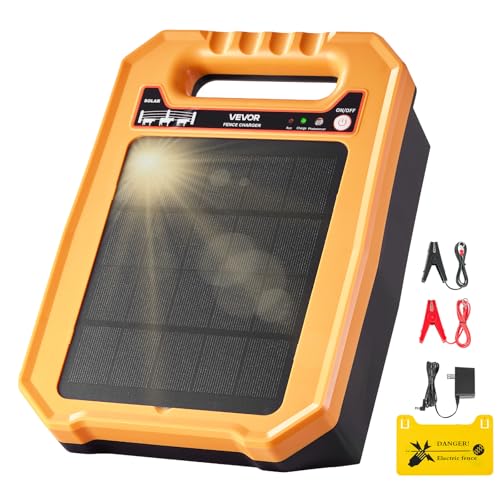
VEVOR’s solar fence charger adds durability and strong electrical output to the list, delivering up to 8 kV and 0.3J shock energy. Its automatic pulsing maintains stable current, reducing the risk of harm to animals or family members. The unit features an IP65 waterproof rating and wide operating temperatures from -20°C to 50°C, making it suitable for diverse American climates. A 10W monocrystalline solar panel powers the energizer, offering a green energy solution with low maintenance. This option is ideal for mid-to-large properties with variable weather exposure.
In practical terms, the VEVOR charger emphasizes protection against intruders while maintaining safety. The weather resistance and efficient charging support make it a good match for gardens, livestock yards, and poultry runs where weather variability is a factor. Users should assess their average sun hours and fence layout to determine if 7-day runtime fits their schedule or if more frequent recharging is necessary.
ANDMON S600 Solar Electric Fence Charger

The Andmon S600 is a high-output model with up to 35 miles of fence coverage and 0.65 joules of energy. It supports both solar power and DC charging, extending operation time to about 14 days without sun when using the internal battery. Installation flexibility is a highlight, as it can be mounted on various post types, including Y-posts, T-posts, and wooden posts. This makes it suitable for larger properties where longer fence lines and multiple paddocks require reliable energizing power.
When evaluating this charger, consider your fencing layout, weed pressure, and the density of animals. The S600’s strong range is advantageous for protecting larger herds and garden protections on homesteads. It is a practical option for farm setups seeking durable solar power with adaptable mounting and extended run times.
S1000 1 Joule Solar Fence Charger

The Realpoultry S1000 stands out with a “1 Joule stored” capacity and a stated reach of up to 40 miles. It pairs a rugged, portable design with a 12V/12Ah sealed lead-acid battery and a 15W solar panel to allow operation for up to 8 days without sunlight. The unit is designed for remote pastures and rotational grazing, with simple mounting on suitable steel rods and compatible fence configurations. The S1000 is well-suited for large farms, wildlife exclusion, and off-grid fencing needs where portability and resilience are priorities.
Potential buyers should assess the balance between stored joule capacity and actual field conditions, including fence wire types and height. While the high range is attractive, ensure the unit’s weight, mounting options, and weather resistance align with your site requirements. This model is best for larger operations needing long, reliable duty in variable sun exposure.
Buying Guide: Key Purchase Considerations
Choosing the right solar fence charger blends practical fencing needs with climate, livestock, and maintenance expectations. Here are several factors to consider:
- Range vs. fence length: Real-world range depends on weed control, fence wire type, and layout. Choose a charger that comfortably exceeds your longest run to avoid performance drop-offs.
- Power scheme: Decide between pure solar, DC charging, or hybrid options. DC charging provides flexibility in cloudy regions or during extended overcast periods.
- Post compatibility: Ensure the energizer mounts securely on your post type (T-posts, Y-posts, wooden posts) and has a reliable grounding method if required.
- Durability and weatherproofing: Look for IP ratings (e.g., IP65) and temperature tolerance that match your local climate, including snow, rain, and heat.
- Battery and solar panel quality: Higher-efficiency panels and durable batteries extend run time and reduce maintenance, especially in regions with less daily sun.
- Safety and compliance: Verify that the energizer includes safe pulse intervals and is compliant with local livestock and wildlife containment guidelines.
- Warranty and support: A solid warranty and responsive customer support can reduce downtime after installation.
Performance varies by environment. For small, fenced yards or gardens, a compact unit with 5–8 miles of practical range may suffice. For larger pastures, poultry zones, or multi-paddock farms, models featuring 20–35 miles or higher ranges offer better coverage. In all cases, proper grounding, routine inspections, and weed management near the energizer will optimize effectiveness.