Choosing the right starter fertilizer can dramatically affect germination, root development, and the overall health of a new lawn. This guide highlights top starter fertilizers that are well-suited for grass seed, soil preparation, and early growth. Each option is evaluated for nutrient balance, ease of use, and compatibility with seeding projects—from fresh lawns to sod patches.
Summary of selected products:
| Product | Brand | NPK | Coverage/Size | Key Benefit |
|---|---|---|---|---|
| Scotts Turf Builder Starter Fertilizer for New Grass | Scotts | 24-25-4 | 15 lbs | Boosts new seed and sod growth |
| Scotts Turf Builder Triple Action Built For Seeding | Scotts | Not specified | 4.3 lbs | Prevents weeds while seeding and feeds |
| Lawn Synergy Starter Fertilizer 15-20-10 + Iron | Lawn Synergy | 15-20-10 | 18 lbs | Fast germination with deep root growth |
| Fertilome New Lawn Starter Fertilizer 9-13-7 | ferti-lome | 9-13-7 | 20 lbs | Promotes root and early growth |
| GreenView Spring or Fall Lawn Starter Fertilizer | Greenview | Not specified | 48 lb bag | Covers large areas; convenient for seasonal timing |
Scotts Turf Builder Starter Fertilizer for New Grass

This starter fertilizer is designed specifically for new grass seed and sod. With a 24-25-4 ratio, it provides balanced nutrients that support developing lawns. The product claims a substantial boost in thickness and speed of growth compared with unfed lawns, helping seed take hold quickly and feed after germination. It’s suitable for use when planting seed and can be applied to new lawns requiring robust early nutrition. This option is widely used for both overseeding projects and fresh lawn installations, offering a strong foundation during the critical early weeks.
Scotts Turf Builder Triple Action Built For Seeding

Designed with new lawns in mind, this product combines seeding support with weed prevention and fertilization. It helps protect young grass from common weeds, including dandelions and crabgrass, for several weeks while the seed establishes. The formulation supports jump-start growth, paired with ongoing nourishment to sustain germination and early root development. It’s particularly useful for lawns where weed pressure is a concern during seeding and establishment.
Lawn Synergy Starter Fertilizer 15-20-10 + Iron
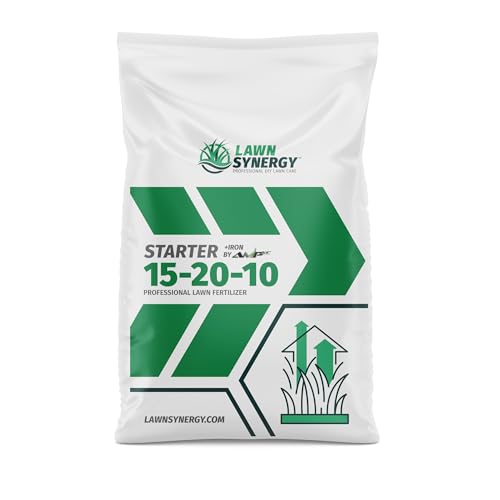
Designed for new lawns and overseeding, Lawn Synergy’s starter fertilizer combines essential nutrients with iron for deeper green color. The 15-20-10 ratio supports rapid germination and robust root systems, while an optional biocatalyst technology (AMP-XC) may enhance nutrient uptake. Nitrogen stabilizers help reduce losses, which means more nutrients stay in the soil where young roots can access them. This product is well-suited for those seeking fast, visible color improvement alongside seed establishment.
Fertilome New Lawn Starter Fertilizer 9-13-7

Fertilome’s 9-13-7 starter fertilizer aims to support seed and sod development by providing essential nutrients that foster root growth and early stem formation. The nutrient balance prioritizes phosphorus to encourage strong root systems, while potassium contributes to overall vigor. The 20-pound bag is a practical size for typical starter projects and works well for mid-sized lawns looking to establish a healthy foundation during the germination phase.
12-12-12 Starter Fertilizer With Iron

This balanced, all-purpose starter fertilizer emphasizes even nutrient delivery with a 12-12-12 NPK ratio and added iron for deeper greening. The product is designed for new lawns, seed germination, and rapid root establishment. Its slow-release components help maintain steady nourishment over time, minimizing the need for frequent applications while supporting seed-to-soil transition and early growth phases.
Buying Guide: Key Purchase Considerations
- NPK balance and iron: For seed germination and root growth, look for starter formulas with higher phosphorus (the middle number) to promote root development. Iron improves color but is secondary to root growth for new lawns.
- Weed prevention vs. seed safety: Some products include pre-emergent weed control. If you’re seeding, ensure the product is labeled safe for new grass and won’t impede seed germination.
- Application method: Granular fertilizers work well for established seedbeds, while liquid formulas with hose-end sprayers offer quick, uniform coverage for sodded or newly seeded areas.
- Coverage and bag size: Match bag size to your lawn area (square feet) to avoid under- or over-fertilizing. Large bags are more economical for bigger projects; smaller bags suit small patches.
- Soil condition and timing: Test soil when possible and align fertilizer application with seed planting windows and seasonal timing (spring and fall are common for cool-season grasses).
- Longevity and nutrient release: Slow-release formulas extend feeding duration, reducing the frequency of applications and delivering nutrients as roots establish.
- Compatibility: Check compatibility with your seed type (cool-season vs warm-season grasses) and whether you’re using sod or newly seeded patches.
Product-focused considerations
- Scotts products: Widely available, well-known for reliable results with new lawns. Look for 24-25-4 or similar blends that emphasize early growth after seeding.
- GreenView and Lawn Synergy: Options that balance color and root growth, with formulations suitable for overseeding and early establishment.
- Fertilome and Yard Mastery: Alternative blends offering different NPK ratios and iron content for specific lawn needs and soil conditions.
Additional Considerations for Different Lawn Scenarios
- New seed vs. established bare patches: Seed-focused formulas prioritize phosphorus for roots; established lawns may benefit from balanced or high-nitrogen blends to encourage rapid green-up.
- Weed pressure: In weed-prone areas, weigh the benefits of pre-emergent weed control against the need for seed germination. Some products are designed for “seed plus weed prevention” but may affect germination rates if misused.
- Soil health: Consider supplements or soil conditioners that improve microbial activity and nutrient uptake, especially when using organic or bio-based fertilizers.
- Water management: Fertilizers work best with proper irrigation. Overwatering can leach nutrients, while under-watering can hinder germination.