Winter lawn care sets the foundation for a lush, green yard come spring. The right winter fertilizer helps roots grow deep, recovers from summer stress, and prepares turf to withstand cold and foot traffic. Below are five top-rated options designed to feed, protect, and strengthen cool-season grasses through fall and into winter. Each product section highlights key benefits, how to apply, and what to expect when soil temperatures cool.
Summary of Selected Products:
| Product | Brand | Area Coverage | Key Benefit |
|---|---|---|---|
| Scotts Turf Builder WinterGuard Fall Lawn Fertilizer | Scotts | 4,000 sq. ft. | Builds deep roots for spring recovery |
| Scotts Turf Builder WinterGuard Fall Weed & Feed3 | Scotts | 4,000 sq. ft. | Controls weeds while feeding for spring |
| Scotts Turf Builder WinterGuard Fall Weed & Feed5 | Scotts | 12,000 sq. ft. | Weed control plus fall feeding for spring readiness |
| Scotts Green Max Lawn Food | Scotts | 5,000 sq. ft. | Fast greening with iron supplement |
| Greenview Fairway Formula Fall Lawn Fertilizer | Greenview | 7,500 sq. ft. | Strengthens turf and promotes deep root growth |
Scotts Turf Builder WinterGuard Fall Lawn Fertilizer
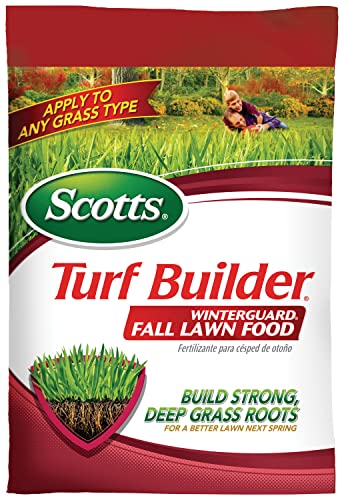
Scotts Turf Builder WinterGuard Fall Lawn Fertilizer is formulated to support all grass types as days shorten and temperatures drop. The product focuses on building robust root systems, which translates to a stronger lawn in the spring. It helps lawns recover from heat, drought, and heavy activity experienced during summer. Application can be made to wet or dry lawns in the fall, making it flexible for different irrigation schedules. Expect a gradual nutrient release that targets soil health and resilience as winter approaches.
For fall applications, this fertilizer emphasizes a deep-rooting strategy, which is essential for cool-season grasses that store energy to push new growth in early spring. Homeowners typically apply as part of an ongoing fall feeding routine, adjusting for lawn size with the 4,000 sq. ft. coverage. While not a weed control product, it pairs well with other seasonal lawn care practices, ensuring nutrients are available when growth resumes with warming temperatures.
Scotts Turf Builder WinterGuard Fall Weed & Feed3

Scotts Turf Builder WinterGuard Fall Weed & Feed3 combines weed control with fall lawn feeding. It targets a broad spectrum of common lawn weeds and provides nutrients that help grass recover and strengthen before winter. This product is suited for lawns with weed pressure that persists into the fall season, offering a convenient single-step solution for both fertilization and weed suppression. Apply when weeds are actively growing and soil temperatures are mild, typically between 60°F and 90°F for optimal effectiveness. The 4,000 sq. ft. coverage makes it a practical choice for mid-sized yards.
The combined approach helps prevent weed seed germination while ensuring turf has access to essential nutrients as days shorten. The dual-action formula can reduce the need for separate weed-control applications later in the season, though it’s still wise to scout for persistent weeds and adjust care as needed. For best results, follow label instructions on application rate and timing to avoid nutrient runoff or over-fertilization in late fall.
Scotts Turf Builder WinterGuard Fall Weed & Feed5

This is a higher-capacity option designed for larger or multiple-yard applications. The WinterGuard Fall Weed & Feed5 product combines weed suppression with fall feeding, covering up to 12,000 sq. ft. It targets listed weeds while delivering nutrients to promote spring green-up and robust root development. The product notes a broad effectiveness against several common lawn weeds, including clover and dandelion, aligning with standard fall lawn care goals. Apply on moist or dry lawns when weeds are actively growing within the recommended temperature range for best weed-killing performance.
Because of the larger coverage, this version is often preferred by homeowners with bigger properties or those who prefer fewer product purchases during the fall. Proper timing remains critical: applying too late can reduce effectiveness as temperatures dip, so align applications with regional fall weather patterns and soil activity. Follow up with regular mowing and continued soil maintenance to maximize results as winter ends.
Scotts Green Max Lawn Food

Scotts Green Max Lawn Food is a dual-action formulation that feeds lawns while delivering iron to promote deep greening. The iron content accelerates visible improvements in color, with a claimed green-up effect in as little as three days in some cases. Suitable for any grass type, it can be used in spring, summer, or fall, making it a versatile option for ongoing lawn care. The presence of iron helps distinguish this product from standard nitrogen-only formulas, as iron supports chlorophyll production and overall turf health in cooler months when nutrients can be less mobile in the soil.
Users should apply evenly across the lawn and follow label directions for timing and amounts. While the green-up is a notable benefit, it’s important to balance this product with a complete nutrient plan to maintain soil structure and root vigor through the winter. Because the product promotes rapid greening, it’s prudent to avoid applying during periods of very slow growth or extended cold spells to prevent nutrient overload without visible turf uptake.
Ultimate 3-18-18 Lawn Food (Liquid)
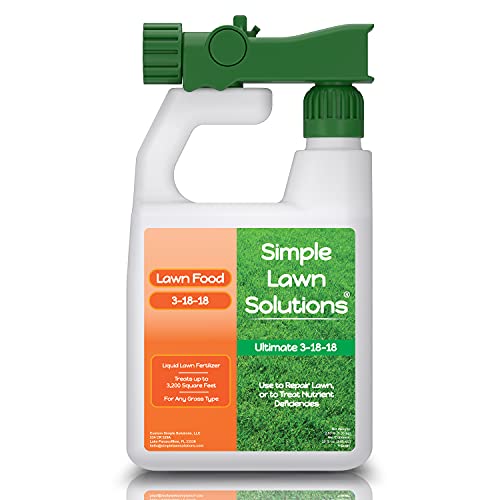
Ultimate 3-18-18 is a concentrated liquid fertilizer designed for quick uptake by roots and foliage. The formulation emphasizes higher phosphorus and potassium relative to nitrogen, supporting root growth and overall lawn vigor. This makes it a suitable option for spring recovery and fall maintenance when quick nutrient delivery is desirable. The liquid format can be applied via sprayer, offering precise control over application rates for lawns of varying sizes. It supports multiple grass types and is compatible with standard lawn care regimes that focus on root vigor and seasonal nourishment.
For winter considerations, this product provides a different nutrient balance than typical granular fall fertilizers. It’s best used as a supplement to a broader winterizing plan that includes soil conditioning, micronutrient balance, and appropriate mowing schedules. Always follow label directions to avoid nutrient overload and ensure even distribution.
Buying Guide: Winter Fertilizer For Grass
Choosing the right winter fertilizer involves evaluating grass type, climate, soil health, and weed pressure. Here are key considerations to help compare options and tailor your approach to your yard:
- Grass type and climate: Cool-season grasses (fescue, Kentucky bluegrass, perennial ryegrass) respond differently to nutrients than warm-season varieties. In northern climates, a fall fertilizer that strengthens root systems and supports winter hardiness is essential. In milder areas, iron-rich formulas can enhance color without unnecessary growth.
- Weed pressure: If your lawn battles weeds in fall, a weed-and-feed product can simplify your routine. Be mindful of herbicide timing, temperature windows, and local regulations. Weeds with aggressive seed banks may require a two-step approach—weed control now and targeted feeding later.
- Root health and soil conditions: Deep-root growth is the foundation of a resilient lawn. Look for products that emphasize root vigor and slow-release nutrients to sustain the turf through cold stress and early spring.
- Coverage and application: Match product coverage to lawn size. Bigger yards may benefit from high-capacity bags or per-acre equivalent formulas, while smaller lawns benefit from precise application to avoid runoff and waste.
- Iron and micronutrients: Iron-enriched formulas can provide rapid visual improvements but should be balanced with overall nutrient needs. Micronutrients support chlorophyll production, soil microbial health, and long-term color stability.
- Timing and soil temperature: The best results typically occur when weeds are actively growing and temperatures are above a modest threshold. Avoid fertilizing when the ground is frozen or when roots are unable to take up nutrients efficiently.
- Environmental considerations: Choose slow-release or controlled-release options when possible to minimize leaching and protect waterways. Follow label directions for safe storage and disposal of bags and tools.
In sum, selecting a winter fertilizer involves balancing root support, weed management, and color maintenance. For many American lawns, a WinterGuard or Weed & Feed product from Scotts delivers reliable root-building and seasonal resilience, while Green Max and Greenview options offer rapid greening and robust root development. Combining a targeted winter fertilizer with proper mowing, watering, and soil care will help lawns emerge strong in early spring.